
Spray Booth For Motor Painting
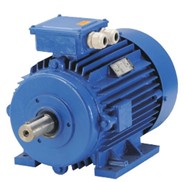
An induction motor (electric motors ) is a generally used AC electric motor. In an induction motor, the electric current in the rotor needed to produce torque is obtained via Electromagnetic induction from the rotating magnetic field of the stator winding. The rotor of an induction motor can be a squirrel cage rotor or wound type rotor.
Spray booth for electric motors — Autocoat Engineering has a vast experience in the field of pretreatment for electric motors & induction motor painting . Most important is the process flow while developing any painting line for the motors or any casting products. Once the process is set, the quality improvement can easily be achieved. Spray Painting process in a motor paint booth - The paint has excellent resistance to various chemicals. This specification covers surface preparation and application of protective coating on motors. Unpainted surfaces The following surfaces will not require protective coating. To determine unpainted areas eg Anodized Aluminum Grounding Pads Brass Machined Surfaces Bronze Motor Leads Chromium Plated Metals Porcelain Enamel Finishes Copper Rubber Galvanized Steel Stainless Steel Glass.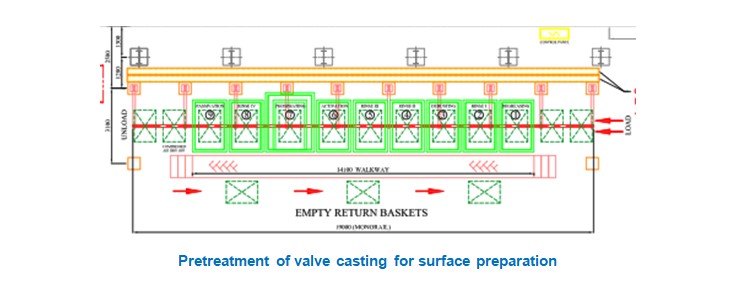 Stage 1 - Pre-treatment of motor casting before sending to paint booth for electric motors. Surface cleaning of the casting as soon as casting are checked and ok for further process. The pre-treatment of motor casting can be achieved by minimum of seven tank process or 10 tank process. For more information Contact Us. Once a phosphate coat is applied , motor cast is transferred to motor paint booth . This process can even be carried out by Shot Blasting Method.
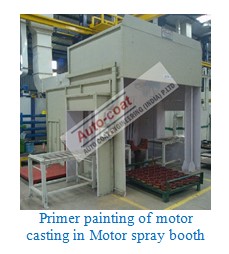 Stage 2 — Induction motor painting — Usually motor casting are placed over a jig so
that, multiple casting can be painted with primer or red oxide in the motor paint booth.
With jigs at use and right spray booth desired paint film in microns is achieved. Due
to paint booth undesired over sprays are removed from the painting area , thereby
making a smooth finish over the cast.
Stage 3 — Application of primer for additional coat building & surface cleaning before final finish coat can be applied.
During the assembly of the motors, the motor passes through many component assembly areas, testing zones etc . During this lot of oil & grease marks get over the cast. These marks are to be removed thoroughly with cleaners and again a mid primer coat is applied in the motor spray booth.
Stage 4 — Application of final finish colour for induction motor painting — After the above stage the assembled motors are either dried on conveyor for motor painting or by other batch process. The Motors are finally painted by two methods for smaller frame size Conveyorised electric motor painting method & for Large frame size Paint booth for electric motors with material handling equipment.
Stage 2 — Induction motor painting — Usually motor casting are placed over a jig so
that, multiple casting can be painted with primer or red oxide in the motor paint booth.
With jigs at use and right spray booth desired paint film in microns is achieved. Due
to paint booth undesired over sprays are removed from the painting area , thereby
making a smooth finish over the cast.
Stage 3 — Application of primer for additional coat building & surface cleaning before final finish coat can be applied.
During the assembly of the motors, the motor passes through many component assembly areas, testing zones etc . During this lot of oil & grease marks get over the cast. These marks are to be removed thoroughly with cleaners and again a mid primer coat is applied in the motor spray booth.
Stage 4 — Application of final finish colour for induction motor painting — After the above stage the assembled motors are either dried on conveyor for motor painting or by other batch process. The Motors are finally painted by two methods for smaller frame size Conveyorised electric motor painting method & for Large frame size Paint booth for electric motors with material handling equipment.
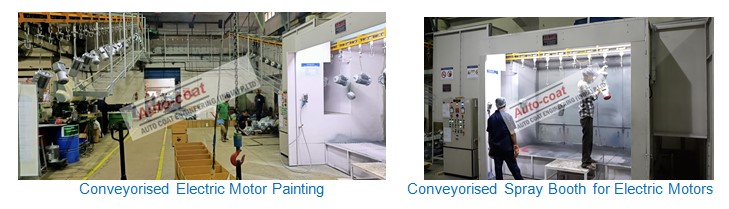 Autocoat has supplied many motor paint booths & conveyorised motor painting lines, which are running almost in 3 shift basis trouble free. We have designed, developed & manufactured Conveyor motor painting for frame sizes from (83 to 132 ) . Conveyorised motor painting is very fast & economical.
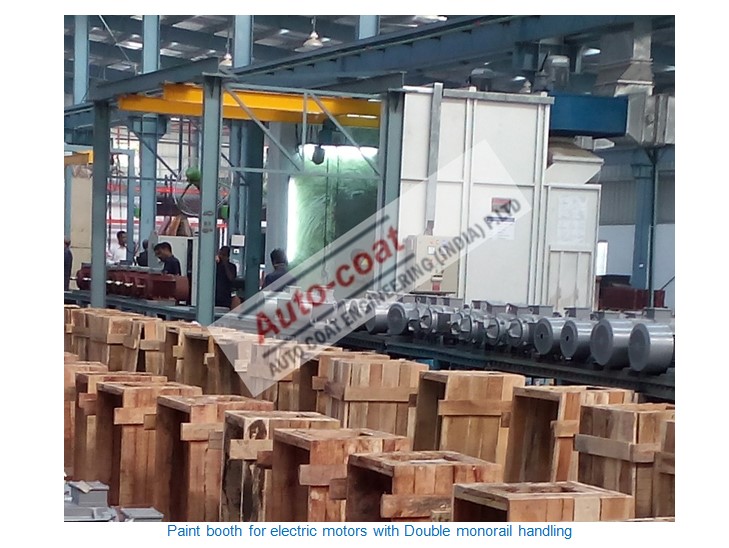 We have also developed, industrial motors painting with monorail handling equipment for heavy motors & and frame sizes above 132 + for HT motors , this method enhances the capability of the painter to lift & lower the heavy motors & also to rotate . Our motor spray booths are very efficient & match the pollution board norms.
Training sessions are been conducted to educate the painters & subordinates to get maximum productivity & effective maintenance.
Our major clients from motor industry are Siemens electric motors , Hindustan electric motors , Crompton greaves , Govik electrical & many more.
We have also developed, industrial motors painting with monorail handling equipment for heavy motors & and frame sizes above 132 + for HT motors , this method enhances the capability of the painter to lift & lower the heavy motors & also to rotate . Our motor spray booths are very efficient & match the pollution board norms.
Training sessions are been conducted to educate the painters & subordinates to get maximum productivity & effective maintenance.
Our major clients from motor industry are Siemens electric motors , Hindustan electric motors , Crompton greaves , Govik electrical & many more.